

























































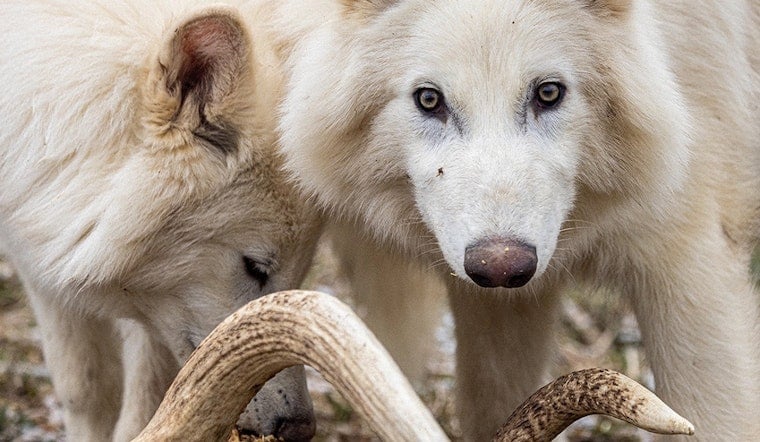
On a quiet October morning in 2024, Romulus and Remus let out their first, haunting howls, shattering a silence lasting over 10,000 years. The two animals, dire wolves genetically reconstructed through advanced biotechnology, became the first de-extinct animals to step onto modern Earth, as announced in a recent X post by Colossal Biosciences. Through refinements in genetic engineering and synthetic biology, scientists skillfully edited traits from authentic ancient DNA—recovered from fossils dating back between 11,500 and 72,000 years—into the genome of their living relative species, creating creatures closely resembling those that had vanished millennia ago, according to the same post.
SOUND ON. You’re hearing the first howl of a dire wolf in over 10,000 years. Meet Romulus and Remus—the world’s first de-extinct animals, born on October 1, 2024.
— Colossal Biosciences® (@colossal) April 7, 2025
The dire wolf has been extinct for over 10,000 years. These two wolves were brought back from extinction using… pic.twitter.com/wY4rdOVFRH
Even as their arrival summons excitement about reversing humanity's devastating impacts on biodiversity, it fuels increasingly vibrant discussions among scientists over whether de-extinction itself is scientifically reliable, ethically sound, or even truly achievable.
Colossal Biosciences, co-founded by entrepreneur Ben Lamm and Harvard genomics pioneer George Church, captured international attention with the proclamation of their mission to "jumpstart nature’s ancestral heartbeat," potentially bringing back iconic species such as the woolly mammoth and Tasmanian tiger in addition to the dire wolf, according to Colossal Labs and Biosciences's website. Utilizing CRISPR/Cas9 genome editing technology, they incorporate genetic material from extinct animals into closely related living species, effectively reviving core traits and ecological functions once lost to extinction.
"Our goal has been clear: To revolutionize history and be the first company to successfully use CRISPR technology in the de-extinction of previously lost species," stated Colossal's announcement about the birth of Romulus and Remus. This milestone, they assert, marks a moment not only for the firm itself, but also for conservation, science, and human stewardship of Earth's delicate ecosystems.
Yet, the very label "de-extinction" has become controversial. A growing cohort of scientists doubts whether true disappearance reversal is even conceivable. As Clare Palmer, a professor of environmental philosophy at Texas A&M University, articulated succinctly, "From what I'm seeing, you are not really de-extincting anything. You are creating something else," as she is quoted by Yale Environment 360.
The obstacles to authentic de-extinction run deeper than semantics. Genetic blueprints retrieved from museum specimens or permafrost remains inevitably degrade over time, according to the Yale article. Any reconstruction of a species’ genome will likely be incomplete or fragmented, missing key genetic information and traits. Furthermore, extinct animals rely not just on DNA codes, but also ecological interactions and cultural behaviors that shape species identity—factors that modern ecosystems no longer provide.
"The gene pool of millions of animals, the population structure, the behavior and habitat were just as essential," asserted Dutch ecologist Ronald Goderie, whose project, Grazelands Rewilding, employs selective breeding to recreate the morphology of extinct aurochs without calling it de-extinction. With generations of cattle selectively bred to display aurochs-like features, Goderie's team nonetheless carefully refrains from suggesting they have resurrected the original species, emphasizing that extinction remains permanent, per Yale Environment 360.
Melanie Challenger, deputy co-chair of the Nuffield Council on Bioethics, holds similar reservations. She strongly argues that the term is fundamentally misleading. "It's not de-extinction, it's genetically engineering a novel organism to fulfill the functions, theoretically, of an extant organism. You're not bringing anything back from the dead," she commented, according to a recent CNN report
Even experts aligned with Colossal acknowledge these limitations openly. The company’s Chief Science Officer, molecular paleobiologist Beth Shapiro, makes clear their vision doesn't entail perfectly restoring an extinct species. "It isn't possible right now to recreate something that is 100 percent identical in every way—genetically, physiologically, behaviorally—to a species that is gone," Shapiro admitted, as reported by Yale Environment 360. Instead, the critical value lies in engineering "ecological proxies," bringing back proverbial cornerstone traits of lost animals to mend damaged ecosystems.
Still, Colossal’s ambitious scientific advancements underscore broader benefits beyond reviving animal proxies. For example, the firm's work on woolly mammoths has led researchers toward a vaccine preventing the deadly Elephant Endotheliotropic Herpesvirus (EEHV), a highly dangerous condition afflicting young Asian elephants, according to Colossal’s website. Additionally, their research on species like the dodo has guided specific conservation techniques meant to aid endangered species, exemplified by genetic interventions addressing the dwindling population genetics of the Mauritius pink pigeon.
Yet skepticism endures. Professor Christopher Preston of the University of Montana calls Colossal's vision—reintroducing cold-adapted mammals like mammoths to stem Arctic ice loss—"absurd," that is, unrealistic at influencing rapid environmental changes within the critical time constraints imposed by climate change, as he told CNN. Nevertheless, he conceded merit in strategically restoring lost species, noting observations from projects like Grazelands Rewilding’s aurochs-like cattle, which have significantly revitalized regional ecosystems throughout Europe.
Despite critiques and doubts from certain sectors of academia, investor support continues pouring into de-extinction biotechnology ventures such as Colossal. The company recently garnered an additional $200 million investment influx—raising their total funding to $435 million—to bolster their march towards an ambitious scientific future, as disclosed by CNN. Investors see potential not just in restoring charismatic creatures but also utilizing genetic expertise more widely to preserve biodiversity and safeguard modern ecosystems threatened by human-led activities and global climate shifts.
As Romulus and Remus' howls echoed across newsfeeds and social media, the enduring debate around de-extinction intensified. Controversy aside, the event clearly signified an unprecedented step, prompting humanity to explore a frontier once confined to imagination. It underscores humankind's growing determination—and dilemma—in addressing environmental harm through increasingly formidable scientific interventions: a forging of both daring hopes and uncomfortable realities.
Yet, even as pioneering experiments advance, whether to cautiously hope or skeptically critique becomes secondary to a larger truth: the very ecosystems we now strive vigorously to heal through deep innovation remain vastly changed by humanity, and the creatures reintegrated into them, no matter how scientifically sophisticated, will always carry the stamp marking them distinctively of our time, as Yale Environment 360 insightfully suggests. Extinction, perhaps, may remain forever; yet through new proxies and engineered echoes, at least portions of nature can begin modest recovery, bringing balance, stability, and ecological resilience.





